
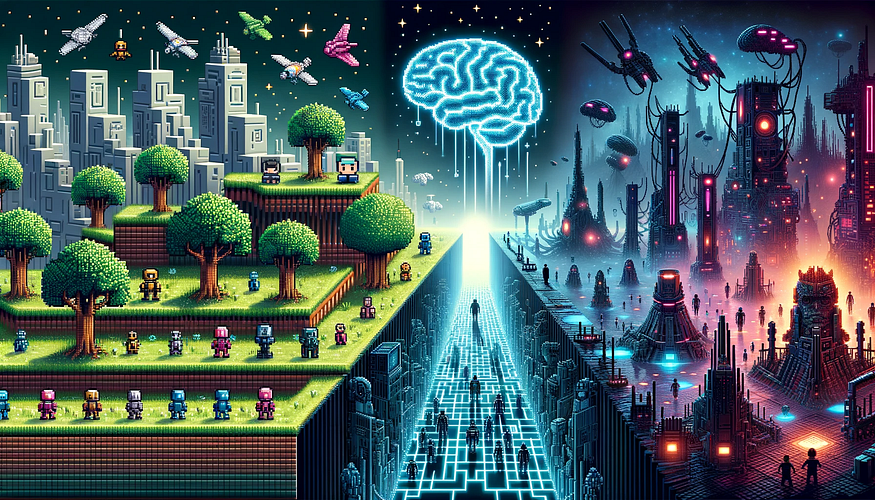
Imagine stepping into a game world where every texture, character, and environment feels astonishingly real, yet created in the blink of an eye. Picture a slot game that not only spins reels but evolves its visual landscapes dynamically, or a poker game where each card table seems handcrafted in real-time to match the mood of the players. This isn’t a distant dream; this is the era of AI-generated game graphics, and it’s shaping up to be the next big revolution in gaming. The days when designers painstakingly crafted every pixel are giving way to a new paradigm where AI algorithms can generate complex graphics, realistic textures, and even entirely new worlds with unprecedented speed and creativity. But with this leap forward come challenges, questions, and opportunities that could redefine how we play and experience games.
The Rise of AI in Game Design
Artificial Intelligence has already infiltrated gaming in various ways — smarter NPCs, adaptive difficulty, and procedural content generation have enhanced gameplay for years. Yet, AI-generated graphics take this influence a step further. Instead of merely influencing game mechanics, AI now plays a creative role, producing visual assets that traditionally required teams of artists months to craft. This shift is not just about speed; it’s about unlocking possibilities. Developers can experiment with endless variations of characters, environments, and textures without worrying about human resource limitations. However, this surge of creativity also raises concerns about authenticity, originality, and the emotional touch that human artists bring to games. How do we ensure that AI doesn’t replace creativity but enhances it? And how can developers balance innovation with the tactile, nuanced artistry that makes games memorable?
Breaking the Barriers of Traditional Game Graphics
Traditional game graphics are bound by time, budget, and manpower. Every new level, character, or item requires hours of design, modeling, and rendering. Even with modern engines like Unreal or Unity, creating visually stunning games demands extensive resources. AI-generated graphics remove many of these barriers. For example, procedural AI systems can generate entire landscapes, populate cities with realistic details, or even adapt environments to player behavior in real-time. This not only reduces development costs but also allows for games to become more immersive, reactive, and personalized. Players no longer settle for static worlds — they can experience landscapes and scenarios that evolve uniquely for them. The potential for AI-generated graphics to revolutionize how we perceive game worlds is enormous, bridging the gap between imagination and reality like never before.
AI in Enhancing Realism and Immersion
Immersion is the holy grail of modern gaming. Players want worlds that feel alive, with subtle details that make every interaction believable. AI-generated graphics bring this level of realism closer to the mainstream. By analyzing thousands of reference images, AI can create textures, lighting effects, and character animations that mimic real life. Shadows dance with accurate physics, surfaces reflect nuanced light, and even characters’ expressions can respond dynamically to in-game events. Imagine walking through a forest in a game where each leaf, branch, and ray of sunlight is rendered with near-perfect realism. Or consider a qqemas game where the backdrop isn’t static but morphs subtly with each spin, enhancing engagement and keeping players mesmerized. This isn’t just about visuals; it’s about crafting an emotional experience that resonates with players on a deeper level.
Personalization: Games That Adapt to You
One of the most exciting aspects of AI-generated graphics is personalization. Unlike traditional games where every player experiences the same environments, AI can tailor visuals to individual preferences or gameplay styles. In a pkv games, for example, the table, card designs, and ambiance could shift based on player mood, strategy, or even historical behavior. This kind of customization makes games feel uniquely yours, increasing emotional investment and long-term engagement. For developers, this opens new avenues for monetization and player retention, while for players, it transforms gaming from a passive experience to a personalized adventure. AI doesn’t just create graphics; it creates connections between the player and the virtual world that were previously impossible.
Overcoming the Creative Bottleneck
Game development is often constrained by creativity bottlenecks. Even the most talented designers can’t generate infinite worlds or variations quickly. AI-generated graphics act as a creative accelerator. Developers can feed AI systems a style guide or concept art, and within minutes, receive dozens of high-quality visual options. These outputs can then be fine-tuned, combined, or animated, dramatically shortening production timelines. This acceleration doesn’t just help indie studios with limited resources; even AAA developers can leverage AI to focus on storytelling and gameplay innovation while AI handles repetitive or time-consuming tasks. Yet, this also sparks debates about authorship and originality. If AI generates the visuals, who is the artist? The debate is ongoing, but the answer may lie in viewing AI as a collaborative partner rather than a replacement.
Cost Efficiency Without Compromising Quality
Developing high-end game graphics has always been an expensive endeavor, requiring large teams, advanced software, and long production cycles. AI-generated graphics offer a solution that balances cost and quality. With AI, studios can produce realistic textures, detailed environments, and complex models at a fraction of the cost. This democratizes game development, allowing smaller studios to compete visually with industry giants. Imagine a startup creating a visually rich slot game that rivals blockbuster productions — AI makes this feasible. Cost efficiency also allows developers to experiment more boldly, pushing boundaries without the fear of wasting resources. The result is a surge in creative risk-taking that could lead to the next generation of iconic games.
Challenges and Ethical Considerations
Despite its immense potential, AI-generated graphics are not without challenges. One concern is the risk of homogenization; if every studio relies on the same AI models, games might start to look similar. Another issue is the ethical use of AI-generated content. For instance, using AI to replicate real artists’ styles without consent could spark legal and moral dilemmas. Additionally, AI-generated content may lack the subtle imperfections that give art its humanity, making some visuals feel uncanny or sterile. Developers must navigate these pitfalls carefully, ensuring that AI enhances creativity rather than undermining it. Balancing efficiency, originality, and ethical responsibility is crucial as this technology becomes mainstream.
The Future: Dynamic Worlds and Interactive Experiences
Looking forward, AI-generated graphics will likely evolve beyond static creation into dynamic, interactive worlds. Players may encounter environments that change with each playthrough, characters that adapt visually to player actions, and stories that influence the visual narrative itself. AI could even merge with other emerging technologies like virtual reality, procedural storytelling, and voice AI to create experiences where graphics, gameplay, and narrative are fully integrated. Imagine a multiplayer RPG where your journey alters the visual landscape for everyone, or a poker game where the stakes and tension visually transform the table, creating an entirely immersive atmosphere. The potential for AI-generated graphics to redefine interactivity and immersion is staggering.
Conclusion: A Revolution in the Making
AI-generated game graphics are not a passing trend; they represent a fundamental shift in how games are created, experienced, and monetized. From enhancing realism and immersion to breaking creative bottlenecks and enabling personalization, the technology promises to redefine the gaming landscape. Developers can create visually stunning slot games and poker games faster, cheaper, and with more creative freedom than ever before. Yet, this revolution comes with its challenges — ethical concerns, risks of homogenization, and the need to preserve human creativity. Ultimately, the key lies in leveraging AI as a tool, collaborator, and creative partner. As AI continues to evolve, one thing is certain: the future of gaming will be more immersive, dynamic, and visually spectacular than we ever imagined. For players and developers alike, AI-generated graphics are not just an innovation; they are the next big revolution that will change the way we experience games forever.
